The Bridge Was New. The Shot Was Already in My Head.
The Charles W. Cullen Bridge over Indian River Inlet opened in 2012, and I photographed it almost immediately. I uploaded this particular image to Fine Art America on October 9, 2012, so the bridge was still very new when I was trying to figure out how I wanted to photograph it.
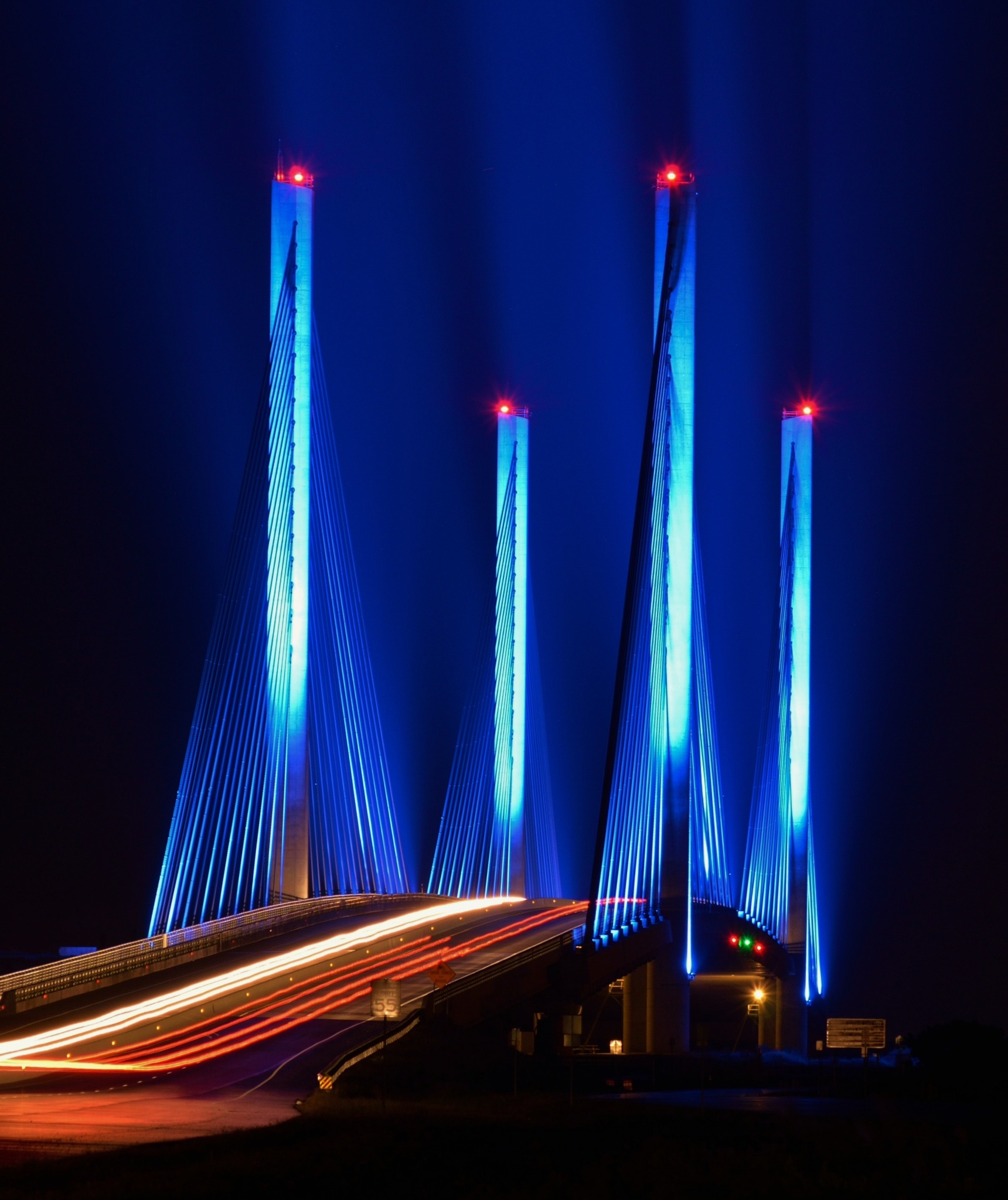
What interested me wasn’t simply getting a picture of the bridge. I wanted a photograph that made the bridge itself feel dramatic — something that emphasized the four towers, the blue lighting, the traffic moving through it, and the symmetry that made the structure so visually striking at night.
That meant the first real challenge wasn’t the camera.
It was figuring out where to stand.
I spent time looking for an angle where the two closest towers would line up left to right, while the two towers farther back would do the same. From the right position north of the bridge, looking south, the structure seemed to settle into place.
Once I found that viewpoint, the photograph I wanted became much clearer.
The problem was that getting everything else to cooperate was going to take a while.
The Shot I Had to Wait For
Some photographs happen because you happen to be standing in the right place at the right time. This wasn’t one of those photographs.
I had the image I wanted in my head long before I actually captured it, and I probably spent weeks waiting for all the pieces to line up.
The weather had to cooperate, but traffic mattered too. I needed cars traveling in both directions because I wasn’t trying to photograph individual vehicles. I wanted their headlights and taillights to become continuous streams of light running through the scene.
That made summer the best opportunity. June through August meant beach traffic, and beach traffic meant I had a better chance of getting enough cars crossing the bridge at exactly the right moments.
There was also a fairly narrow window each night. I needed it to be fully dark, but I had to photograph the bridge before its blue lighting switched into a lower-power mode later in the evening — around 11 p.m., if I remember correctly. Once that happened, much of the brilliance I wanted in the bridge was gone.
Even the red warning lights on top of the four towers mattered. They blinked, and not in perfect synchronization. The exposure had to remain open long enough that all four lights would appear illuminated somewhere during the shot.
So once everything else was right, I still had to wait for traffic.
Because I was north of the bridge shooting south, I would watch for a southbound car approaching the frame. That was my cue to start the exposure. Then I needed a northbound vehicle to crest the bridge soon enough to carry its light trail through the opposite side of the photograph.
The problem was that I couldn’t really see in advance whether that second car was going to appear at exactly the right time.
So I kept trying.
Each attempt took roughly twenty seconds or so — I don’t remember the exact exposure anymore — and then the camera seemed to take forever processing it. What was probably around a minute feels much longer when you’re standing there wondering whether you finally got the shot.
Then came the tiny camera screen.
I could look at it and think, That might be it.
But I couldn’t really know.
Not until I got home, put the image on a proper screen, and saw whether all of those weeks of planning had finally come together.
When the Work Paid Off
Getting the photograph was satisfying enough. What happened afterward made it even more meaningful.
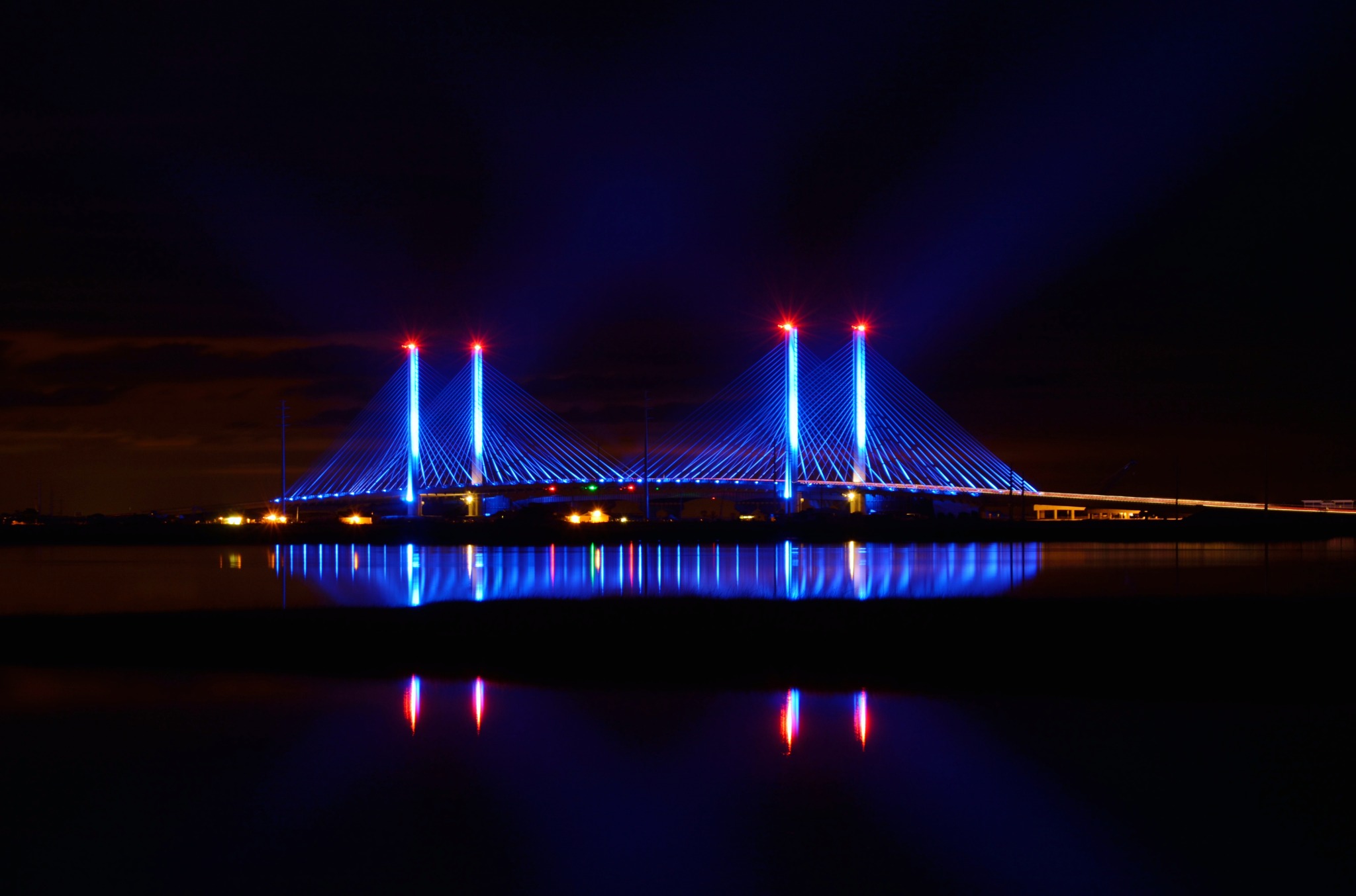
Not long after, I entered Delaware Beach Life Magazine’s annual photography contest. It was the first photography contest I had ever entered, and this image took first place in its category.
If memory serves, I did pretty well overall that year — I believe I came away with two first-place finishes and a second-place finish across different categories. But this bridge photograph is the one that especially sticks with me because of everything that went into creating it.
It also became more than a contest photograph.
I have this image hanging on my own walls in two different forms: a framed glossy print and a canvas. After spending so much time imagining the shot, finding the viewpoint, waiting for the right conditions and repeating the exposure until everything finally lined up, I never really got tired of looking at it.
Apparently, I’m not the only one.
The Indian River Inlet Bridge has become one of the strongest subjects in my photography portfolio, with this and another view of the bridge accounting for more of my Fine Art America print sales than almost anything else I’ve photographed.
There’s something satisfying about that.
A photograph that required weeks of planning, twenty seconds or so of exposure, a little luck with traffic, and a long wait staring at a tiny camera screen ultimately became one of the images people connected with most.
Sometimes getting the shot really is worth the wait.